102Sector timing
Does trend-timing energy and construction stocks give a real edge? Rejected: the benefit was reduced market exposure, not timing skill (p = 0.26).
- Year
- 2026
- Status
- Live
- Python
- pandas
- walk-forward
- random-timing null
- block bootstrap
The question
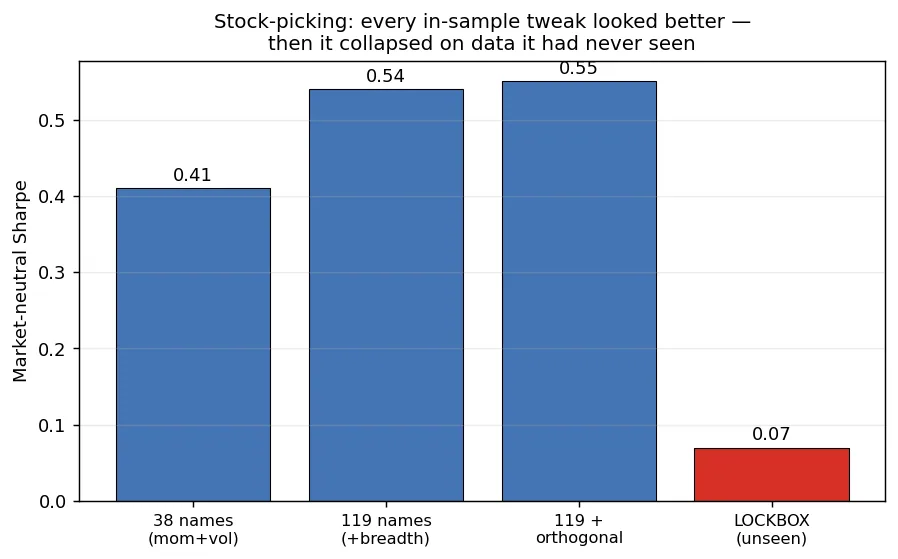
Stock-picking in energy and construction had already failed out of sample: a long/short model looked better with every in-sample tweak (market-neutral Sharpe 0.41, then 0.54, then 0.55) and earned −0.5% on the sealed lockbox while buy-and-hold returned +32.7%. The return seemed to live in owning the sectors. So: can trend rules time that exposure, or is the edge an artefact?
What I did
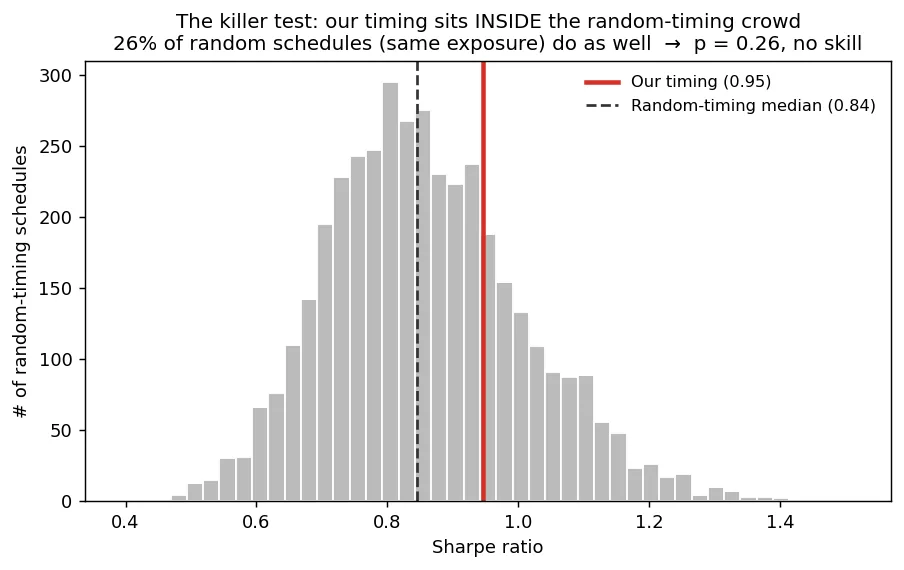
Froze a plan before running anything: two equal-weighted sector baskets, about 42 trend configurations, an anchored walk-forward that trades the top 20% by in-sample Sortino on each unseen year, and a four-part pass rule. The key control: 5,000 random in/out schedules with the same time in the market.
What came out of it
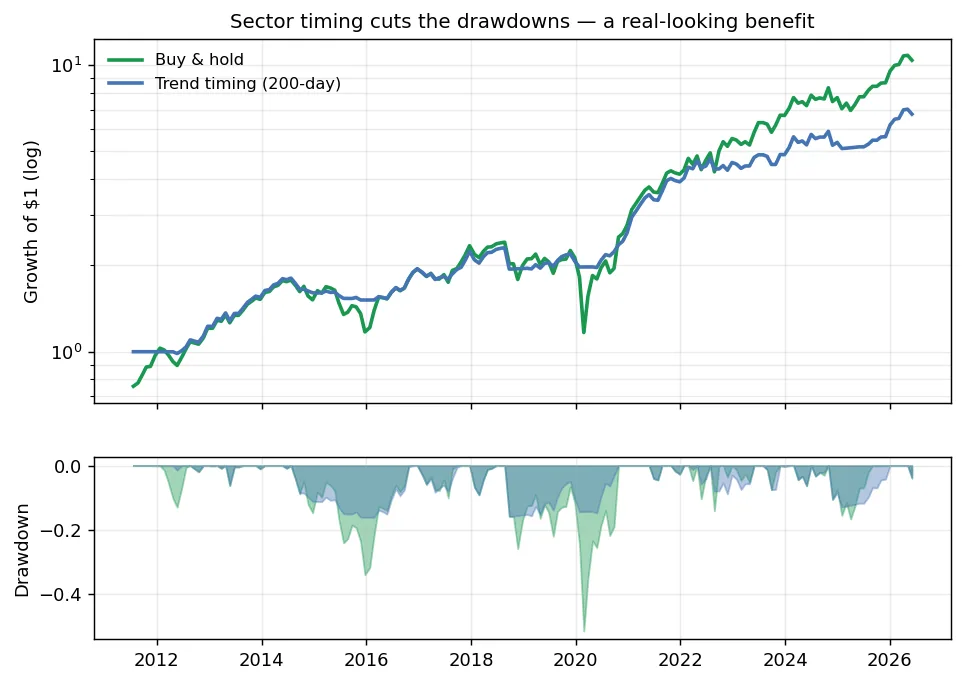
Out of sample the strategy had a Sharpe of 0.93 against buy-and-hold's 0.86 and half the drawdown (−24% against −52%). But 26% of random schedules did as well (p = 0.26), the confidence interval on the Sharpe advantage was [−0.22, +0.42], and timing won in only 1 of 3 subperiods. Rejected: it was reduced market exposure, not skillful timing.
What I'd try next
The lockbox is spent, so the only clean test left is forward paper-trading, ideally through a choppy market rather than a trending one.